koborin.ai Architecture
This site, koborin.ai, is my personal site (Technical Garden) for publishing technical notes and thoughts.
This article introduces the overall architecture and design philosophy of the site. I’ll explain why I chose this setup from both infrastructure and frontend perspectives.
Overall Architecture
Section titled “Overall Architecture”Let’s start with a bird’s-eye view of the site’s structure.
Terminology
Section titled “Terminology”| Abbreviation | Full Name | Description |
|---|---|---|
| LB | Application Load Balancer | Distributes requests to appropriate backends |
| NEG | Serverless network endpoint group | Connection point to Cloud Run services |
| WIF | Workload Identity Federation | Authentication from GitHub Actions to Google Cloud |
| IAP | Identity-Aware Proxy | Access control using Google accounts |
Key Points
Section titled “Key Points”- Request path: DNS (Cloudflare) → Global HTTPS LB → Cloud Run (dev/prod)
- Dev environment is protected by IAP +
X-Robots-Tag: noindexto prevent search engine indexing - CI/CD: GitHub Actions → Workload Identity Federation → Cloud Build / Pulumi
Design Philosophy
Section titled “Design Philosophy”Here’s what I considered when building this site, from both infrastructure and frontend perspectives.
Infrastructure Design
Section titled “Infrastructure Design”Single Google Cloud Project + 3 Stacks
Section titled “Single Google Cloud Project + 3 Stacks”In healthcare or financial systems, strict requirements often apply, making it common to separate GCP projects entirely:
- Complete separation of audit trails and logs
- Strict permission separation for “who can access the admin console”
- Compliance requirements
For a personal site, such strictness is unnecessary.
However, as a developer, I still want a dev/prod distinction. Testing directly in production is risky, and I want to verify changes before releasing them.
So I chose to keep costs and operational burden low by using a single GCP project, while separating Cloud Run services into dev and prod.
State in IaC
Section titled “State in IaC”IaC tools like Pulumi and Terraform manage a State file to track “which resources are currently deployed.”
State serves the following purposes:
- Records current resource state: Tracks whether a resource is created, updated, or deleted
- Baseline for diff detection: Compares code changes against State to determine what to create/update/delete
- Synchronization for team development: Storing State remotely allows multiple people to operate the same infrastructure
For this site, I store Pulumi’s State in GCS (Google Cloud Storage). Since each stack has its own separate file, the structure looks like this:
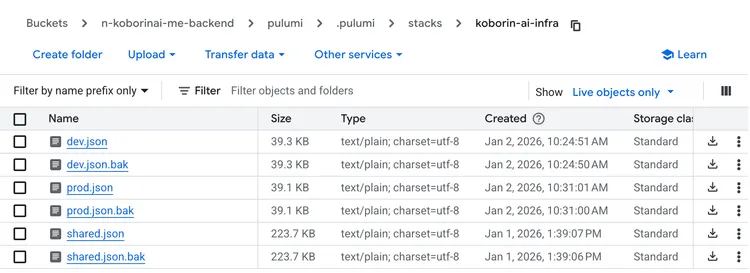
shared.json, dev.json, and prod.json are the State files for each stack.
Responsibilities of shared / dev / prod
Section titled “Responsibilities of shared / dev / prod”| Stack | Responsibility |
|---|---|
shared | Common resources (LB, WIF, Artifact Registry, Managed SSL Cert) |
dev | Dev Cloud Run service koborin-ai-web-dev |
prod | Prod Cloud Run service koborin-ai-web-prod |
Here, shared functions less as an “environment” and more as a State boundary for grouping common resources.
Since the LB handles host-based routing for both environments, it’s naturally a shared resource. The same applies to Artifact Registry and Workload Identity Federation, which are used across environments.
IaC Framework Migration: CDKTF → Pulumi Go
Section titled “IaC Framework Migration: CDKTF → Pulumi Go”The IaC for this site was originally written in CDK for Terraform (CDKTF).
I liked being able to manage infrastructure as code while defining Terraform resources type-safely in TypeScript.
However, CDKTF was sunset / archived on December 10, 2025.
Terraform CDK (CDKTF) will sunset and be archived on December 10, 2025. HashiCorp, an IBM Company, will no longer maintain or develop the project after that date.
I chose Pulumi Go as the migration target. Here’s why:
- I like Go: I’ve been writing more Go lately, and it’s nice to unify infrastructure code in Go as well
- Same “write infrastructure in code” paradigm: Like CDKTF, you can define infrastructure using a programming language
- Low migration cost: The resource structure and concepts are similar, making migration relatively straightforward
Frontend Design
Section titled “Frontend Design”No Need for Custom API / DB
Section titled “No Need for Custom API / DB”For a personal site, I considered the following requirements:
- Write and publish technical notes and thoughts in Markdown (MDX)
- No need for dynamic data fetching or user authentication
- Keep operations as simple as possible
With these requirements, there’s no need for a custom API server or database. Static content generation is sufficient.
GitHub as CMS
Section titled “GitHub as CMS”As an engineer myself, I don’t need a CMS (like WordPress or Notion). Managing MDX files directly in a GitHub repository is enough.
- Article creation and editing are version-controlled with Git
- PR-based reviews and previews are possible
- CI/CD automatically builds and deploys
This eliminates the need for a separate database, reducing operational costs.
Adopting Starlight
Section titled “Adopting Starlight”When selecting a framework, I referenced the site structure of genkit.dev. genkit.dev uses Starlight and provides a polished UX as a documentation site.
Reasons for choosing Starlight:
- Astro-based: Specialized for static site generation with excellent performance
- Multilingual support: Can provide content in both English and Japanese
- Documentation-focused features: Sidebar, search, dark mode included by default
- MDX support: Can use React components within Markdown
Request Path
Section titled “Request Path”From here, I’ll explain the flow when a user accesses the site.
1. DNS Resolution (Cloudflare)
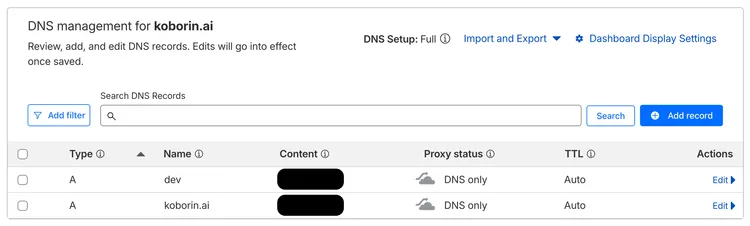
Section titled “1. DNS Resolution (Cloudflare)”The domain was originally acquired through Cloudflare, so I configured Cloudflare A records to point koborin.ai and dev.koborin.ai to the GCP static IP.
Note: DNS is configured manually in the Cloudflare console.
2. Global HTTPS Load Balancer
Section titled “2. Global HTTPS Load Balancer”When traffic hits the static IP, the Global HTTPS Load Balancer receives it.
The LB uses a URL Map to route traffic based on the hostname:
koborin.ai→ Prod Backend Service → Cloud Runkoborin-ai-web-proddev.koborin.ai→ Dev Backend Service → Cloud Runkoborin-ai-web-dev
3. IAP Access Control
Section titled “3. IAP Access Control”When accessing dev.koborin.ai, Identity-Aware Proxy (IAP) performs authentication at the front.
Only my Google account is allowed access; all other users are blocked.
| State | Screenshot |
|---|---|
Dev access | 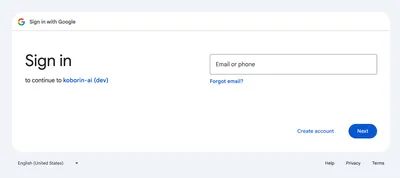 |
Dev access denied | 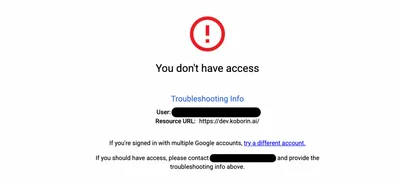 |
Additionally, dev environment responses include the X-Robots-Tag: noindex, nofollow header, so even if someone could access it, it wouldn’t be indexed by search engines.
Site Features
Section titled “Site Features”Here, I’ll introduce the features this site provides.
llms.txt
Section titled “llms.txt”This site provides LLM context files at /llms.txt.
| File | Content |
|---|---|
/llms.txt | Index with links to all variants |
/llms-full.txt | All English articles (with full Markdown body) |
/llms-ja-full.txt | All Japanese articles (with full Markdown body) |
/llms-tech.txt, /llms-ja-tech.txt | Tech category only |
/llms-life.txt, /llms-ja-life.txt | Life category only |
> Personal site + technical garden.
## Full (with article content)- https://koborin.ai/llms-full.txt- https://koborin.ai/llms-ja-full.txt
## By Category
### Tech- https://koborin.ai/llms-tech.txt- https://koborin.ai/llms-ja-tech.txt
### Life- https://koborin.ai/llms-life.txt- https://koborin.ai/llms-ja-life.txt
OSS projects often publish llms.txt to help LLMs understand “what the project is and how to use it.” This is incredibly useful, providing context for LLMs to correctly work with libraries and frameworks.
For a personal site, there’s a different use case. As my thoughts and technical notes accumulate over time (at least that’s the plan… I hope to keep it up…), it might be useful in the future to have an LLM reference “what I was thinking in the past.”
With that possibility in mind, I publish the full article body in this format.
Engagement Features
Section titled “Engagement Features”Article pages include features to encourage engagement with readers.
Giscus (Comments)
Section titled “Giscus (Comments)”Giscus is a comment system that uses GitHub Discussions as its backend.
- Readers can log in with their GitHub account to comment and react
- Comments are stored in GitHub Discussions, so no separate database is needed
- Automatically syncs with the site’s dark/light mode
Share Buttons
Section titled “Share Buttons”Buttons are provided for sharing articles on social media:
- X (formerly Twitter)
- Bluesky
- Mastodon
- Hatena Bookmark
- Copy Link
These features are displayed only on article pages with publishedAt in the frontmatter. They don’t appear on index pages or general documentation pages.
CI/CD is implemented with GitHub Actions.
App Deployment
Section titled “App Deployment”| Trigger | Workflow | Actions |
|---|---|---|
| On PR | app-ci.yml | Validate lint / typecheck / build |
| On main merge | app-release.yml | Cloud Build → Artifact Registry → pulumi up |
app-v* tag | app-release.yml | Same as above (deploys to prod) |
Infra Deployment
Section titled “Infra Deployment”| Trigger | Workflow | Actions |
|---|---|---|
| On PR | plan-infra.yml | pulumi preview to review changes |
| On main merge | release-infra.yml | pulumi up to apply infrastructure |
infra-v* tag | release-infra.yml | Same as above (applies to prod) |
Both App and Infra deployments ultimately update Cloud Run through Pulumi.
Instead of using the gcloud run deploy command directly, we use the following flow:
- Cloud Build builds the Docker image and pushes it to Artifact Registry
pulumi config set imageUri <new image URI>updates the Pulumi configurationpulumi upupdates the Cloud Run service with the new image
This approach ensures that infrastructure state always matches Pulumi’s State. Running gcloud run deploy manually could cause drift from the State, but going through Pulumi eliminates that concern.
CI Optimization by Change Type
Section titled “CI Optimization by Change Type”This site adjusts CI execution scope based on the nature of PR changes.
This approach is inspired by the distinction between Behavior Change and Structure Change that t-wada introduced at the Developer Productivity Conference 2025.
The original source is Kent Beck’s book “Tidy First?”, which proposes categorizing code changes into “behavior changes” and “structure changes” to reduce review burden and clarify the intent of changes.
Lessons from a Previous Project
Section titled “Lessons from a Previous Project”In a previous full-stack project at work, I built E2E tests with Playwright as guardrails for AI agents.
That project also separated app and infra, with a rule that CI would run whenever code under app/ changed. However, after integrating E2E tests into CI, execution time ballooned to 13 minutes, turning CI into a significant bottleneck.
The problem was that even for changes that clearly had no UI impact (like adding model fields or refactoring), full E2E tests would run every time. The lesson learned: test scope should be adjusted based on the nature of the change.
Label-Based Branching
Section titled “Label-Based Branching”Based on this experience, koborin.ai uses PR labels to branch CI execution steps.
| Label | Meaning | CI Behavior |
|---|---|---|
change:behavior | Behavior change (UI/output/config changes) | Full checks (lint + build + audit) |
change:structure | Structure change (refactoring/formatting) | Lightweight checks (lint only) |
GitHub Actions determines the change type from PR labels and branches accordingly:
- name: Determine change type (labels)  id: change-type  run: |    if [[ "${{ contains(github.event.pull_request.labels.*.name, 'change:structure') }}" == "true" ]]; then      echo "type=structure" >> "$GITHUB_OUTPUT"    else      echo "type=behavior" >> "$GITHUB_OUTPUT"    fi
- name: Build  if: steps.change-type.outputs.type == 'behavior'  working-directory: app  run: npm run build
The default is behavior (full checks), switching to lightweight checks only when the change:structure label is explicitly applied.
Documentation for AI Agents
Section titled “Documentation for AI Agents”This change type distinction is also used when AI agents create PRs.
By documenting definitions like the following in AGENTS.md, AI can judge the appropriate label based on the change content:
- Behavior Change: Content changes under
app/src/content/docs/, changes toastro.config.mjsorDockerfile, Pulumi stack changes, etc. - Structure Change: Updates to
README.mdorAGENTS.md, comment-only changes, refactoring, etc.
While it will take time for this workflow to become fully established, adjusting CI scope based on change nature has proven effective for improving developer experience.
Workload Identity Federation
Section titled “Workload Identity Federation”All workflows use Workload Identity Federation, so there’s no need to store service account keys in GitHub Secrets.
GitHub Actions uses OIDC tokens to authenticate with Google Cloud and impersonate a pre-configured service account.
Implementation Details
Section titled “Implementation Details”From here, I’ll introduce specific implementation details. Those interested can expand the accordions to see the code.
Stack-Based Infrastructure Implementation
Section titled “Stack-Based Infrastructure Implementation”infra/stacks/shared.go
Section titled “infra/stacks/shared.go”Defines common resources:
- API Enablement: Cloud Run, Compute, IAM, Artifact Registry, IAP, etc.
- Artifact Registry: Container image storage
- Global Static IP: PREMIUM tier static IP
- Managed SSL Certificate: Multi-domain certificate for
koborin.aianddev.koborin.ai - URL Map: Host-based routing
- Backend Services: dev (IAP enabled) and prod (no IAP)
- Serverless NEG: Connection to Cloud Run services (references service name as string to avoid circular dependencies)
- Workload Identity Federation: For authentication from GitHub Actions
View shared.go code
package stacks
import (  "strings"
  "github.com/pulumi/pulumi-gcp/sdk/v8/go/gcp/artifactregistry"  "github.com/pulumi/pulumi-gcp/sdk/v8/go/gcp/compute"  "github.com/pulumi/pulumi-gcp/sdk/v8/go/gcp/iam"  "github.com/pulumi/pulumi-gcp/sdk/v8/go/gcp/iap"  "github.com/pulumi/pulumi-gcp/sdk/v8/go/gcp/projects"  "github.com/pulumi/pulumi-gcp/sdk/v8/go/gcp/serviceaccount"  "github.com/pulumi/pulumi/sdk/v3/go/pulumi"  "github.com/pulumi/pulumi/sdk/v3/go/pulumi/config")
func Shared(ctx *pulumi.Context) error {  cfg := config.New(ctx, "")  gcpCfg := config.New(ctx, "gcp")
  projectID := gcpCfg.Require("project")  projectNumber := cfg.Require("projectNumber")  iapUser := cfg.Require("iapUser")  oauthClientID := cfg.Require("oauthClientId")  oauthClientSecret := cfg.RequireSecret("oauthClientSecret")
  // Enable Required APIs  requiredAPIs := []string{    "run.googleapis.com",    "compute.googleapis.com",    "iam.googleapis.com",    "cloudresourcemanager.googleapis.com",    "artifactregistry.googleapis.com",    "cloudbuild.googleapis.com",    "iap.googleapis.com",    "monitoring.googleapis.com",    "logging.googleapis.com",    "certificatemanager.googleapis.com",  }
  var apiServices []pulumi.Resource  for _, api := range requiredAPIs {    logicalName := "api-" + strings.ReplaceAll(api, ".", "-")    svc, err := projects.NewService(ctx, logicalName, &projects.ServiceArgs{      Project:                  pulumi.String(projectID),      Service:                  pulumi.String(api),      DisableDependentServices: pulumi.Bool(false),      DisableOnDestroy:         pulumi.Bool(false),    })    if err != nil {      return err    }    apiServices = append(apiServices, svc)  }
  // Artifact Registry  _, err := artifactregistry.NewRepository(ctx, "artifact-registry", &artifactregistry.RepositoryArgs{    Project:      pulumi.String(projectID),    Location:     pulumi.String("asia-northeast1"),    RepositoryId: pulumi.String("koborin-ai-web"),    Description:  pulumi.String("Container images for koborin.ai web application (dev/prod)"),    Format:       pulumi.String("DOCKER"),    DockerConfig: &artifactregistry.RepositoryDockerConfigArgs{      ImmutableTags: pulumi.Bool(true),    },  }, pulumi.DependsOn(apiServices))  if err != nil {    return err  }
  // Global Static IP  staticIP, err := compute.NewGlobalAddress(ctx, "global-ip", &compute.GlobalAddressArgs{    Project:     pulumi.String(projectID),    Name:        pulumi.String("koborin-ai-global-ip"),    AddressType: pulumi.String("EXTERNAL"),    IpVersion:   pulumi.String("IPV4"),    Description: pulumi.String("Static IP for koborin.ai HTTPS load balancer"),  }, pulumi.DependsOn(apiServices))  if err != nil {    return err  }
  // Dev Environment Backend  devNEG, err := compute.NewRegionNetworkEndpointGroup(ctx, "dev-neg", &compute.RegionNetworkEndpointGroupArgs{    Project:             pulumi.String(projectID),    Region:              pulumi.String("asia-northeast1"),    Name:                pulumi.String("koborin-ai-dev-neg"),    NetworkEndpointType: pulumi.String("SERVERLESS"),    CloudRun: &compute.RegionNetworkEndpointGroupCloudRunArgs{      Service: pulumi.String("koborin-ai-web-dev"),    },  }, pulumi.DependsOn(apiServices))  if err != nil {    return err  }
  devBackend, err := compute.NewBackendService(ctx, "dev-backend", &compute.BackendServiceArgs{    Project:              pulumi.String(projectID),    Name:                 pulumi.String("koborin-ai-dev-backend"),    Protocol:             pulumi.String("HTTP"),    LoadBalancingScheme:  pulumi.String("EXTERNAL_MANAGED"),    TimeoutSec:           pulumi.Int(30),    CustomResponseHeaders: pulumi.StringArray{pulumi.String("X-Robots-Tag: noindex, nofollow")},    Backends: compute.BackendServiceBackendArray{      &compute.BackendServiceBackendArgs{        Group:          devNEG.ID(),        BalancingMode:  pulumi.String("UTILIZATION"),        CapacityScaler: pulumi.Float64(1.0),      },    },    Iap: &compute.BackendServiceIapArgs{      Enabled:            pulumi.Bool(true),      Oauth2ClientId:     pulumi.String(oauthClientID),      Oauth2ClientSecret: oauthClientSecret,    },  }, pulumi.DependsOn([]pulumi.Resource{devNEG}))  if err != nil {    return err  }
  _, err = iap.NewWebBackendServiceIamBinding(ctx, "dev-iap-access", &iap.WebBackendServiceIamBindingArgs{    Project:           pulumi.String(projectID),    WebBackendService: devBackend.Name,    Role:              pulumi.String("roles/iap.httpsResourceAccessor"),    Members:           pulumi.StringArray{pulumi.Sprintf("user:%s", iapUser)},  }, pulumi.DependsOn([]pulumi.Resource{devBackend}))  if err != nil {    return err  }
  // Prod Environment Backend  prodNEG, err := compute.NewRegionNetworkEndpointGroup(ctx, "prod-neg", &compute.RegionNetworkEndpointGroupArgs{    Project:             pulumi.String(projectID),    Region:              pulumi.String("asia-northeast1"),    Name:                pulumi.String("koborin-ai-prod-neg"),    NetworkEndpointType: pulumi.String("SERVERLESS"),    CloudRun: &compute.RegionNetworkEndpointGroupCloudRunArgs{      Service: pulumi.String("koborin-ai-web-prod"),    },  }, pulumi.DependsOn(apiServices))  if err != nil {    return err  }
  prodBackend, err := compute.NewBackendService(ctx, "prod-backend", &compute.BackendServiceArgs{    Project:             pulumi.String(projectID),    Name:                pulumi.String("koborin-ai-prod-backend"),    Protocol:            pulumi.String("HTTP"),    LoadBalancingScheme: pulumi.String("EXTERNAL_MANAGED"),    TimeoutSec:          pulumi.Int(30),    Backends: compute.BackendServiceBackendArray{      &compute.BackendServiceBackendArgs{        Group:          prodNEG.ID(),        BalancingMode:  pulumi.String("UTILIZATION"),        CapacityScaler: pulumi.Float64(1.0),      },    },    LogConfig: &compute.BackendServiceLogConfigArgs{      Enable:     pulumi.Bool(true),      SampleRate: pulumi.Float64(1.0),    },  }, pulumi.DependsOn([]pulumi.Resource{prodNEG}))  if err != nil {    return err  }
  // HTTPS Load Balancer  sslCert, err := compute.NewManagedSslCertificate(ctx, "managed-cert", &compute.ManagedSslCertificateArgs{    Project: pulumi.String(projectID),    Name:    pulumi.String("koborin-ai-cert"),    Managed: &compute.ManagedSslCertificateManagedArgs{      Domains: pulumi.StringArray{        pulumi.String("koborin.ai"),        pulumi.String("dev.koborin.ai"),      },    },  }, pulumi.DependsOn(apiServices))  if err != nil {    return err  }
  urlMap, err := compute.NewURLMap(ctx, "url-map", &compute.URLMapArgs{    Project:        pulumi.String(projectID),    Name:           pulumi.String("koborin-ai-url-map"),    Description:    pulumi.String("Routes traffic to dev/prod backends based on host header"),    DefaultService: prodBackend.ID(),    HostRules: compute.URLMapHostRuleArray{      &compute.URLMapHostRuleArgs{        Hosts:       pulumi.StringArray{pulumi.String("koborin.ai")},        PathMatcher: pulumi.String("prod-matcher"),      },      &compute.URLMapHostRuleArgs{        Hosts:       pulumi.StringArray{pulumi.String("dev.koborin.ai")},        PathMatcher: pulumi.String("dev-matcher"),      },    },    PathMatchers: compute.URLMapPathMatcherArray{      &compute.URLMapPathMatcherArgs{        Name:           pulumi.String("prod-matcher"),        DefaultService: prodBackend.ID(),      },      &compute.URLMapPathMatcherArgs{        Name:           pulumi.String("dev-matcher"),        DefaultService: devBackend.ID(),      },    },  }, pulumi.DependsOn([]pulumi.Resource{devBackend, prodBackend}))  if err != nil {    return err  }
  httpsProxy, err := compute.NewTargetHttpsProxy(ctx, "https-proxy", &compute.TargetHttpsProxyArgs{    Project: pulumi.String(projectID),    Name:    pulumi.String("koborin-ai-https-proxy"),    UrlMap:  urlMap.ID(),    SslCertificates: pulumi.StringArray{      sslCert.ID(),    },  }, pulumi.DependsOn([]pulumi.Resource{urlMap, sslCert}))  if err != nil {    return err  }
  _, err = compute.NewGlobalForwardingRule(ctx, "forwarding-rule", &compute.GlobalForwardingRuleArgs{    Project:             pulumi.String(projectID),    Name:                pulumi.String("koborin-ai-forwarding-rule"),    Target:              httpsProxy.ID(),    PortRange:           pulumi.String("443"),    IpProtocol:          pulumi.String("TCP"),    LoadBalancingScheme: pulumi.String("EXTERNAL_MANAGED"),    NetworkTier:         pulumi.String("PREMIUM"),    IpAddress:           staticIP.Address,  }, pulumi.DependsOn([]pulumi.Resource{httpsProxy, staticIP}))  if err != nil {    return err  }
  // Workload Identity (for GitHub Actions)  workloadIdentityPool, err := iam.NewWorkloadIdentityPool(ctx, "github-actions-pool", &iam.WorkloadIdentityPoolArgs{    Project:                pulumi.String(projectID),    WorkloadIdentityPoolId: pulumi.String("github-actions-pool"),    DisplayName:            pulumi.String("github-actions-pool"),    Description:            pulumi.String("Workload Identity Pool for GitHub Actions workflows"),  })  if err != nil {    return err  }
  _, err = iam.NewWorkloadIdentityPoolProvider(ctx, "github-provider", &iam.WorkloadIdentityPoolProviderArgs{    Project:                        pulumi.String(projectID),    WorkloadIdentityPoolId:         workloadIdentityPool.WorkloadIdentityPoolId,    WorkloadIdentityPoolProviderId: pulumi.String("actions-firebase-provider"),    DisplayName:                    pulumi.String("github-actions-provider"),    Description:                    pulumi.String("GitHub Actions OIDC provider"),    AttributeCondition: pulumi.String(`assertion.repository_owner == "nozomi-koborinai"`),    AttributeMapping: pulumi.StringMap{      "google.subject":             pulumi.String("assertion.repository"),      "attribute.repository_owner": pulumi.String("assertion.repository_owner"),    },    Oidc: &iam.WorkloadIdentityPoolProviderOidcArgs{      IssuerUri: pulumi.String("https://token.actions.githubusercontent.com"),    },  })  if err != nil {    return err  }
  githubActionsSA, err := serviceaccount.NewAccount(ctx, "github-actions-sa", &serviceaccount.AccountArgs{    Project:     pulumi.String(projectID),    AccountId:   pulumi.String("github-actions-service"),    DisplayName: pulumi.String("github-actions-service"),    Description: pulumi.String("Service account for GitHub Actions to deploy via Pulumi"),  })  if err != nil {    return err  }
  _, err = serviceaccount.NewIAMMember(ctx, "github-wif-user", &serviceaccount.IAMMemberArgs{    ServiceAccountId: githubActionsSA.Name,    Role:             pulumi.String("roles/iam.workloadIdentityUser"),    Member: pulumi.Sprintf(      "principal://iam.googleapis.com/projects/%s/locations/global/workloadIdentityPools/%s/subject/nozomi-koborinai/koborin-ai",      projectNumber,      workloadIdentityPool.WorkloadIdentityPoolId,    ),  })  if err != nil {    return err  }
  deployerRoles := []string{    "roles/artifactregistry.admin",    "roles/cloudbuild.builds.builder",    "roles/cloudbuild.builds.viewer",    "roles/run.admin",    "roles/compute.admin",    "roles/iap.admin",    "roles/logging.admin",    "roles/logging.viewer",    "roles/monitoring.admin",    "roles/resourcemanager.projectIamAdmin",    "roles/iam.serviceAccountUser",    "roles/iam.serviceAccountAdmin",    "roles/iam.workloadIdentityPoolAdmin",    "roles/serviceusage.serviceUsageAdmin",    "roles/storage.objectAdmin",  }
  for _, role := range deployerRoles {    logicalName := "deployer-sa-" + strings.ReplaceAll(strings.ReplaceAll(role, ".", "-"), "/", "-")    _, err = projects.NewIAMMember(ctx, logicalName, &projects.IAMMemberArgs{      Project: pulumi.String(projectID),      Role:    pulumi.String(role),      Member:  pulumi.Sprintf("serviceAccount:%s", githubActionsSA.Email),    })    if err != nil {      return err    }  }
  return nil}
infra/stacks/dev.go
Section titled “infra/stacks/dev.go”Defines the dev environment Cloud Run service:
- Cloud Run Service:
koborin-ai-web-dev - IAM: Grants
roles/run.invokerto IAP Service Agent
View dev.go code
package stacks
import (  "fmt"
  "github.com/pulumi/pulumi-gcp/sdk/v8/go/gcp/cloudrunv2"  "github.com/pulumi/pulumi/sdk/v3/go/pulumi"  "github.com/pulumi/pulumi/sdk/v3/go/pulumi/config")
func Dev(ctx *pulumi.Context) error {  cfg := config.New(ctx, "")  gcpCfg := config.New(ctx, "gcp")
  projectID := gcpCfg.Require("project")  projectNumber := cfg.Require("projectNumber")  imageURI := cfg.Require("imageUri")
  webDev, err := cloudrunv2.NewService(ctx, "web-dev", &cloudrunv2.ServiceArgs{    Project:  pulumi.String(projectID),    Location: pulumi.String("asia-northeast1"),    Name:     pulumi.String("koborin-ai-web-dev"),    Ingress:  pulumi.String("INGRESS_TRAFFIC_INTERNAL_LOAD_BALANCER"),    Template: &cloudrunv2.ServiceTemplateArgs{      ExecutionEnvironment: pulumi.String("EXECUTION_ENVIRONMENT_GEN2"),      Containers: cloudrunv2.ServiceTemplateContainerArray{        &cloudrunv2.ServiceTemplateContainerArgs{          Image: pulumi.String(imageURI),          Envs: cloudrunv2.ServiceTemplateContainerEnvArray{            &cloudrunv2.ServiceTemplateContainerEnvArgs{              Name:  pulumi.String("NODE_ENV"),              Value: pulumi.String("development"),            },            &cloudrunv2.ServiceTemplateContainerEnvArgs{              Name:  pulumi.String("NEXT_PUBLIC_ENV"),              Value: pulumi.String("dev"),            },          },        },      },      Scaling: &cloudrunv2.ServiceTemplateScalingArgs{        MinInstanceCount: pulumi.Int(0),        MaxInstanceCount: pulumi.Int(1),      },    },    Traffics: cloudrunv2.ServiceTrafficArray{      &cloudrunv2.ServiceTrafficArgs{        Type:    pulumi.String("TRAFFIC_TARGET_ALLOCATION_TYPE_LATEST"),        Percent: pulumi.Int(100),      },    },  })  if err != nil {    return err  }
  _, err = cloudrunv2.NewServiceIamMember(ctx, "web-dev-iap-invoker", &cloudrunv2.ServiceIamMemberArgs{    Project:  pulumi.String(projectID),    Location: pulumi.String("asia-northeast1"),    Name:     webDev.Name,    Role:     pulumi.String("roles/run.invoker"),    Member:   pulumi.String(fmt.Sprintf("serviceAccount:service-%s@gcp-sa-iap.iam.gserviceaccount.com", projectNumber)),  })  if err != nil {    return err  }
  return nil}
infra/stacks/prod.go
Section titled “infra/stacks/prod.go”Defines the prod environment Cloud Run service:
- Cloud Run Service:
koborin-ai-web-prod - IAM: Grants
roles/run.invokertoallUsers(public access)
View prod.go code
package stacks
import (  "github.com/pulumi/pulumi-gcp/sdk/v8/go/gcp/cloudrunv2"  "github.com/pulumi/pulumi/sdk/v3/go/pulumi"  "github.com/pulumi/pulumi/sdk/v3/go/pulumi/config")
func Prod(ctx *pulumi.Context) error {  cfg := config.New(ctx, "")  gcpCfg := config.New(ctx, "gcp")
  projectID := gcpCfg.Require("project")  imageURI := cfg.Require("imageUri")
  webProd, err := cloudrunv2.NewService(ctx, "web-prod", &cloudrunv2.ServiceArgs{    Project:  pulumi.String(projectID),    Location: pulumi.String("asia-northeast1"),    Name:     pulumi.String("koborin-ai-web-prod"),    Ingress:  pulumi.String("INGRESS_TRAFFIC_INTERNAL_LOAD_BALANCER"),    Template: &cloudrunv2.ServiceTemplateArgs{      ExecutionEnvironment: pulumi.String("EXECUTION_ENVIRONMENT_GEN2"),      Containers: cloudrunv2.ServiceTemplateContainerArray{        &cloudrunv2.ServiceTemplateContainerArgs{          Image: pulumi.String(imageURI),          Envs: cloudrunv2.ServiceTemplateContainerEnvArray{            &cloudrunv2.ServiceTemplateContainerEnvArgs{              Name:  pulumi.String("NODE_ENV"),              Value: pulumi.String("production"),            },            &cloudrunv2.ServiceTemplateContainerEnvArgs{              Name:  pulumi.String("NEXT_PUBLIC_ENV"),              Value: pulumi.String("prod"),            },          },        },      },      Scaling: &cloudrunv2.ServiceTemplateScalingArgs{        MinInstanceCount: pulumi.Int(0),        MaxInstanceCount: pulumi.Int(10),      },    },    Traffics: cloudrunv2.ServiceTrafficArray{      &cloudrunv2.ServiceTrafficArgs{        Type:    pulumi.String("TRAFFIC_TARGET_ALLOCATION_TYPE_LATEST"),        Percent: pulumi.Int(100),      },    },  })  if err != nil {    return err  }
  _, err = cloudrunv2.NewServiceIamMember(ctx, "web-prod-invoker", &cloudrunv2.ServiceIamMemberArgs{    Project:  pulumi.String(projectID),    Location: pulumi.String("asia-northeast1"),    Name:     webProd.Name,    Role:     pulumi.String("roles/run.invoker"),    Member:   pulumi.String("allUsers"),  })  if err != nil {    return err  }
  return nil}
App Implementation
Section titled “App Implementation”app/astro.config.mjs
Section titled “app/astro.config.mjs”Configuration file for Astro and Starlight:
- Multilingual support:
root(English) andja(Japanese) - Sidebar: Imported from
app/src/sidebar.ts - Custom components: Head, ThemeSelect, Header, Sidebar, Pagination
View astro.config.mjs code
import { defineConfig } from "astro/config";import starlight from "@astrojs/starlight";import rehypeMermaid from "rehype-mermaid";import { sidebar } from "./src/sidebar.ts";
export default defineConfig({  site: "https://koborin.ai",  srcDir: "src",  markdown: {    rehypePlugins: [      [        rehypeMermaid,        {          strategy: "inline-svg",          mermaidConfig: { theme: "neutral" },        },      ],    ],  },  integrations: [    starlight({      title: "koborin.ai",      defaultLocale: "root",      locales: {        root: { label: "English", lang: "en" },        ja: { label: "日本語" },      },      description: "Personal site + technical garden",      favicon: "/favicon.png",      logo: {        src: "./src/assets/_shared/koborin-ai-header.webp",        replacesTitle: true,      },      social: [        { label: "GitHub", icon: "github", href: "https://github.com/nozomi-koborinai" },        { label: "LinkedIn", icon: "linkedin", href: "https://linkedin.com/in/nozomi-koborinai" },        { label: "X", icon: "x.com", href: "https://x.com/fender_kn" },        { label: "Medium", icon: "document", href: "https://medium.com/@nozomi-koborinai" },      ],      sidebar,      customCss: ['./src/styles/custom.css'],      components: {        Head: './src/components/Head.astro',        ThemeSelect: './src/components/ThemeSelect.astro',        Header: './src/components/SiteHeader.astro',        Sidebar: './src/components/Sidebar.astro',        Pagination: './src/components/Pagination.astro',      },      head: [        { tag: 'meta', attrs: { name: 'twitter:card', content: 'summary_large_image' } },      ],      disable404Route: true,    }),  ],});
app/Dockerfile
Section titled “app/Dockerfile”Multi-stage build that serves the static site via nginx:
- Build stage: Node.js for OG image optimization →
astro build - Runtime stage: Serve static files with
nginx:alpine
View Dockerfile code
# Build stageFROM node:22-slim AS buildWORKDIR /app
RUN apt-get update && apt-get install -y \    libnss3 libnspr4 libdbus-1-3 libatk1.0-0 libatk-bridge2.0-0 \    libcups2 libdrm2 libxkbcommon0 libxcomposite1 libxdamage1 \    libxfixes3 libxrandr2 libgbm1 libasound2 libpango-1.0-0 \    libcairo2 webp imagemagick file \    && rm -rf /var/lib/apt/lists/*
COPY package*.json ./RUN npm installRUN npx playwright install chromiumCOPY . .
RUN ./scripts/optimize-og-images.shRUN npm run build
# Runtime stageFROM nginx:alpine AS runtimeCOPY ./nginx/nginx.conf /etc/nginx/nginx.confCOPY --from=build /app/dist /usr/share/nginx/htmlEXPOSE 8080
app/nginx/nginx.conf
Section titled “app/nginx/nginx.conf”nginx configuration:
- Port 8080: To meet Cloud Run requirements
- UTF-8 charset: To prevent character encoding issues in
llms.txt - Cache settings:
/_astro/for 1 year, OG images for 7 days - WebP auto-serving: Resolves requests to
/og/*.pngto.webp
View nginx.conf code
worker_processes  1;
events {  worker_connections  1024;}
http {  server {    listen 8080;    server_name   _;
    root   /usr/share/nginx/html;    index  index.html index.htm;    include /etc/nginx/mime.types;
    charset utf-8;    charset_types text/plain text/css application/json;
    gzip on;    gzip_min_length 1000;    gzip_proxied expired no-cache no-store private auth;    gzip_types text/plain text/css application/json application/javascript text/xml application/xml text/javascript;
    error_page 404 /404.html;    location = /404.html { root /usr/share/nginx/html; internal; }
    location /_astro/ { expires 1y; add_header Cache-Control "public, immutable"; }
    location ~ ^/og/(.+)\.(png|jpe?g)$ {      set $webp_file /og/$1.webp;      try_files $webp_file $uri =404;      expires 7d;      add_header Cache-Control "public";    }
    location /og/ { expires 7d; add_header Cache-Control "public"; }    location = /favicon.png { expires 30d; add_header Cache-Control "public"; }    location / { try_files $uri $uri/index.html =404; }  }}
Conclusion
Section titled “Conclusion”- Simple setup: A single GCP project works well for a personal site
- Developer experience: dev/prod separation with IAP protecting the dev environment
- Frontend: No API/DB needed, GitHub as CMS, built with Starlight
- CDKTF → Pulumi Go migration: Avoiding sunset risk while unifying on a preferred language
- Behavior / Structure awareness: Adjusting CI scope based on the nature of changes
- Site features: llms.txt and Engagement Features (Giscus, Share buttons) to connect with readers